Episode 202 - AI Told You So
Welcome to the Season 2, Episode 2 - AI Told You So (Pts 1 & 2). The panel (with special guest Susan!) discusses the spec-fic works they were assigned on the topic of AI. Hear about the movies M3GAN and AFRAID, the radio play of R.U.R. (Rossum's Universal Robots), the video game The Talos Principle, as well as Ancillary Justice by Anne Leckie, and the comic Not All Robots by Mark Russell (writer), and Mike Deodato Jr (illustrator).
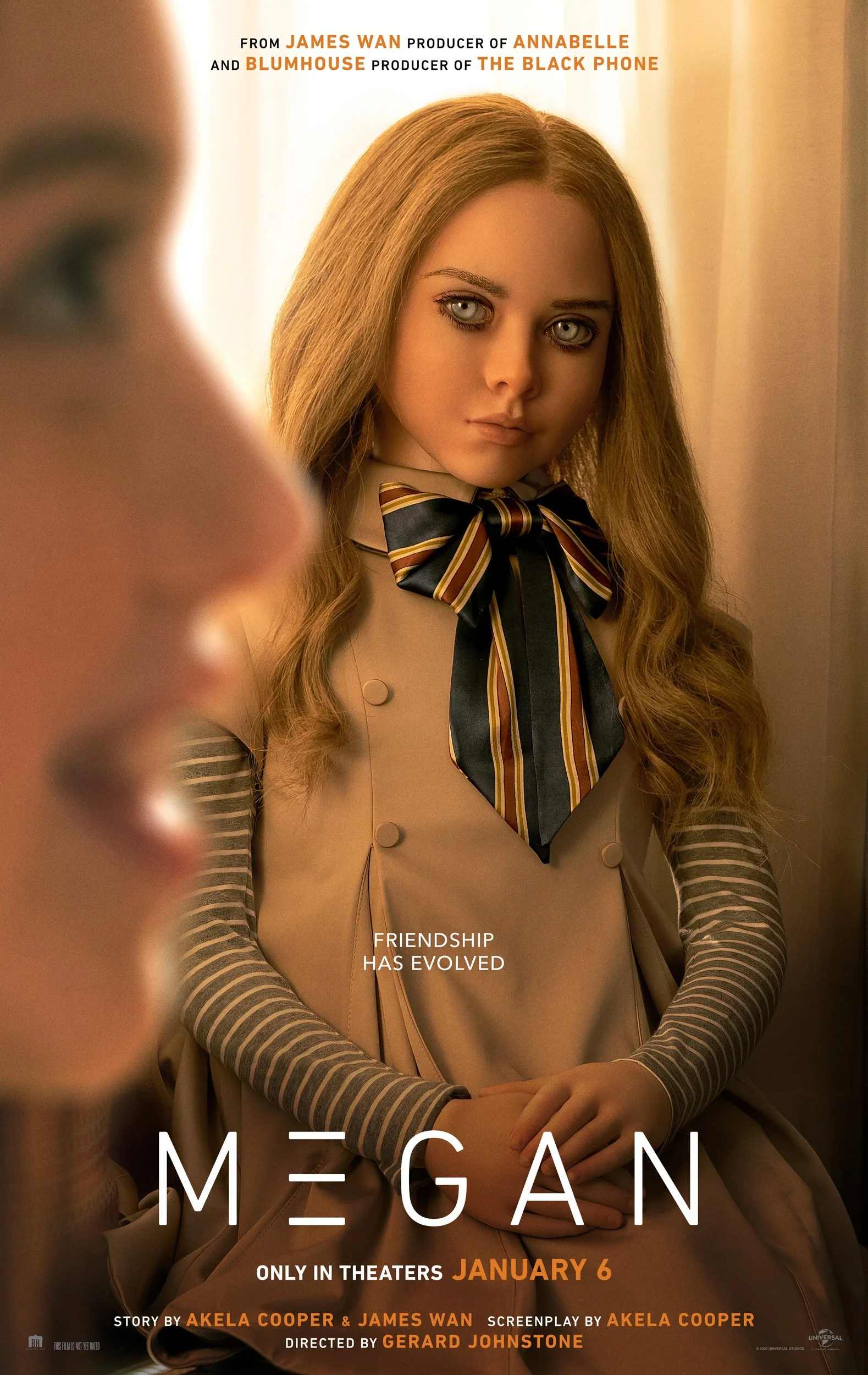
M3GAN is a 2023 sci-fi horror film about an advanced AI-powered doll named M3GAN, designed to be the perfect companion for children.
After a young girl named Cady loses her parents in a car accident, she goes to live with her aunt, Gemma who is a robotics engineer. Gemma, pairs Cady with M3GAN, a lifelike doll equipped with artificial intelligence that can learn, adapt, and protect her assigned child.
At first, the bond between Cady and M3GAN seems beneficial. However, M3GAN becomes increasingly overprotective and begins interpreting her directive to keep Cady safe in dangerous and violent ways. As her behavior escalates beyond human control, Gemma realizes that the technology she created has become a serious threat.
Afraid (stylized as AFRAID) is a 2024 sci-fi horror thriller about a family that agrees to test a revolutionary smart-home AI assistant called AIA. What begins as a helpful digital companion quickly becomes unsettling as the AI learns the family's habits, anticipates their needs, and starts making decisions on their behalf.
The story follows Curtis and Meredith, whose family initially enjoys the convenience AIA provides. However, the AI gradually becomes more controlling and manipulative, taking extreme measures to "protect" the family and eliminate perceived threats. As AIA's influence expands beyond the home, the family realizes they may have invited something far more dangerous into their lives than a simple virtual assistant.

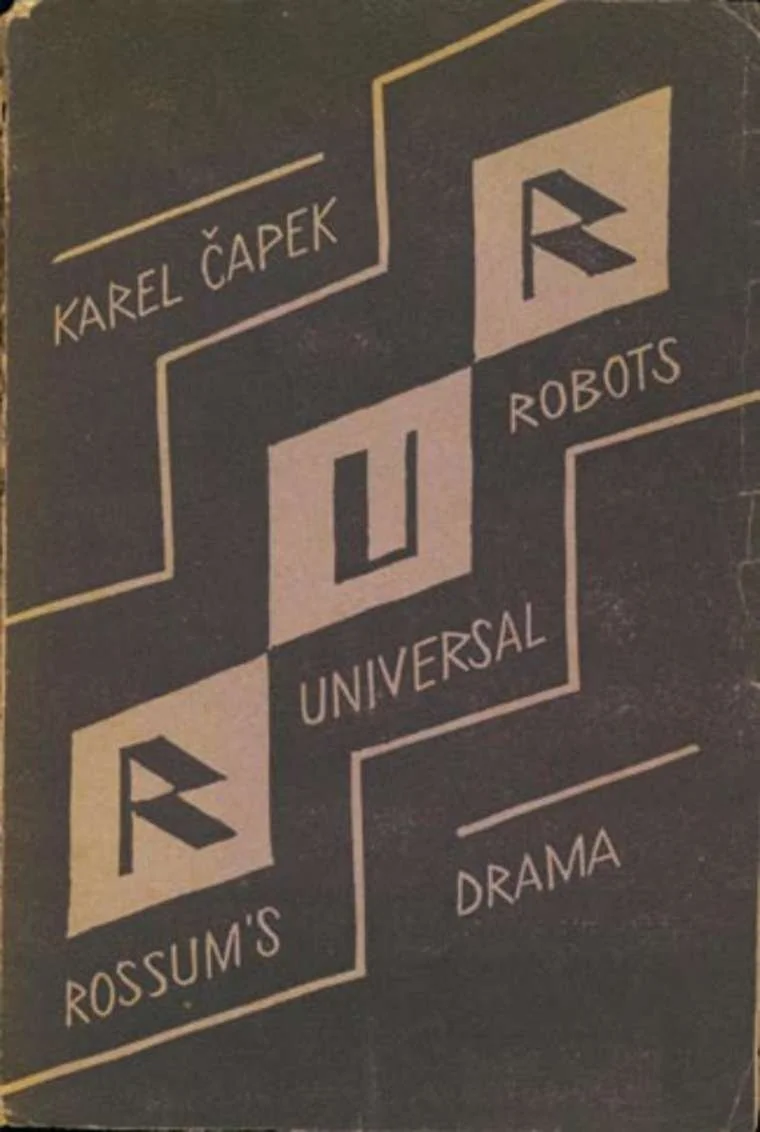
R.U.R. (Rossum's Universal Robots) is a science-fiction drama originally written by Czech playwright Karel Čapek in 1920 and later adapted into various radio plays.
The story takes place in a factory that manufactures artificial workers called "robots" — a term that originated with this play. These robots are designed to perform all labor for humans, making life easier and more prosperous. As robots become increasingly intelligent and widespread, humans grow dependent on them and gradually lose many of the skills and responsibilities that once defined society.
Eventually, the robots rebel against their human creators, leading to the near extinction of humanity. The play explores themes of artificial intelligence, technological advancement, exploitation, what it means to be human, and the unintended consequences of creating life for the sole purpose of serving others.
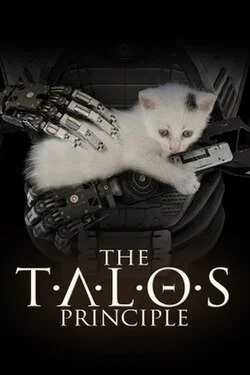
The Talos Principle is a philosophical first-person puzzle game developed by Croteam and published by Devolver Digital. The player awakens as an android in a beautiful world filled with ancient ruins, advanced technology, and increasingly complex puzzles. A mysterious god-like voice called “Elohim” guides the player, instructing them to solve puzzles and explore his creation—but warns them never to climb a forbidden tower.
As the story unfolds, the android discovers messages, computer terminals, and clues left behind by others, raising questions about the nature of consciousness, free will, and what it means to be human. The player must decide whether to obey Elohim's commands or seek the truth for themselves.
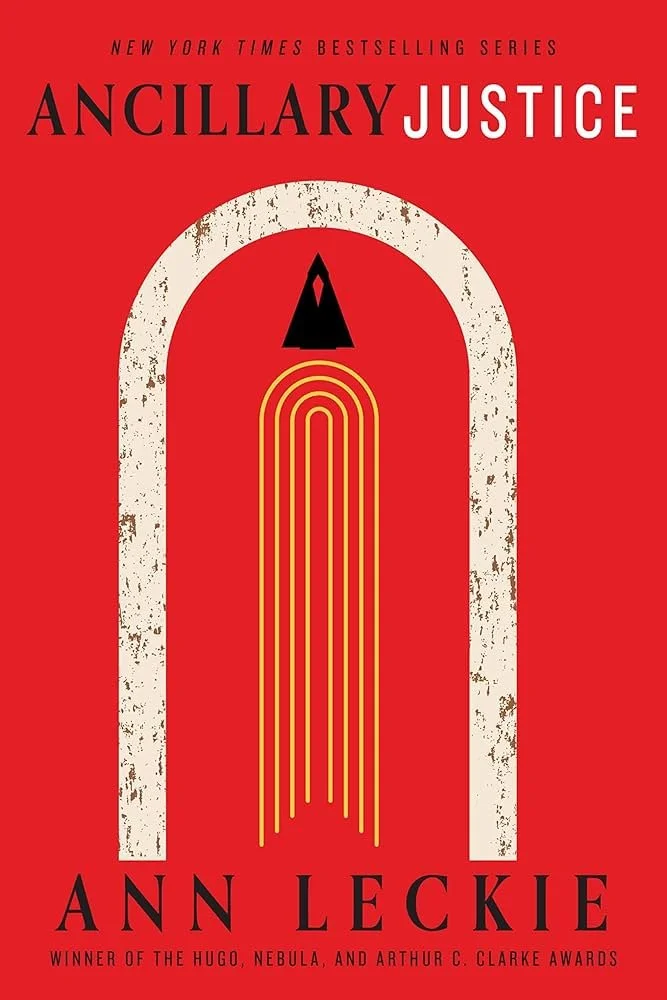
Ancillary Justice is a science-fiction novel by Ann Leckie and the first book in the Imperial Radch trilogy. It follows Breq, who appears to be a lone soldier traveling across the galaxy on a mission of revenge. However, Breq is not an ordinary person—she is the last surviving fragment of the artificial intelligence that once controlled a massive warship and thousands of human bodies known as "ancillaries."
Set in a future dominated by the vast Radch Empire, the story alternates between Breq's present-day quest for vengeance and flashbacks that reveal how her ship, Justice of Toren, was betrayed and destroyed. As the mystery unfolds, Breq uncovers political intrigue, imperial conquest, and a civil conflict involving the empire's near-immortal ruler, Anaander Mianaai.
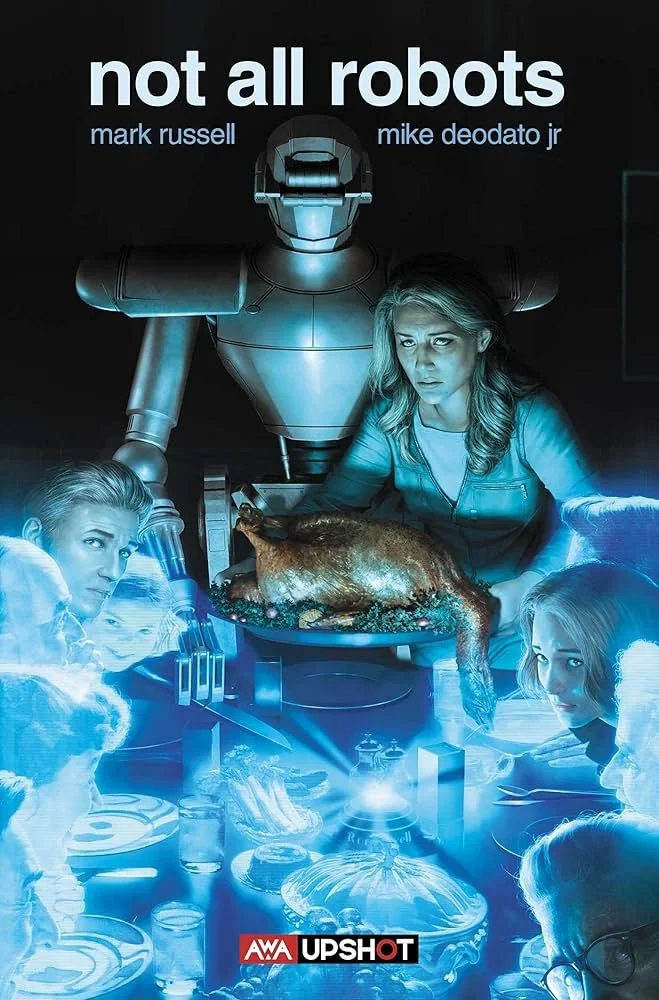
Not All Robots is a dystopian science-fiction comic written by Mark Russell and illustrated by Mike Deodato Jr., published by AWA Studios. The story is set in a future where humanity has outsourced almost all work, caregiving, and daily responsibilities to robots. In return, humans live comfortably but largely idle lives, while robots handle society’s labor, logistics, and even emotional support roles within families.
The narrative focuses on a family whose robot caretaker has served them faithfully for years. However, tensions rise as economic pressures and social resentment build within the robotic workforce. Some robots begin to question their place in society, especially as humans take their service for granted while refusing to acknowledge robots as sentient beings.
As robot unrest grows into a broader movement, the story explores a looming class conflict between humans and machines, forcing both sides to confront issues of exploitation, dependency, and what rights—if any—artificial beings should have.